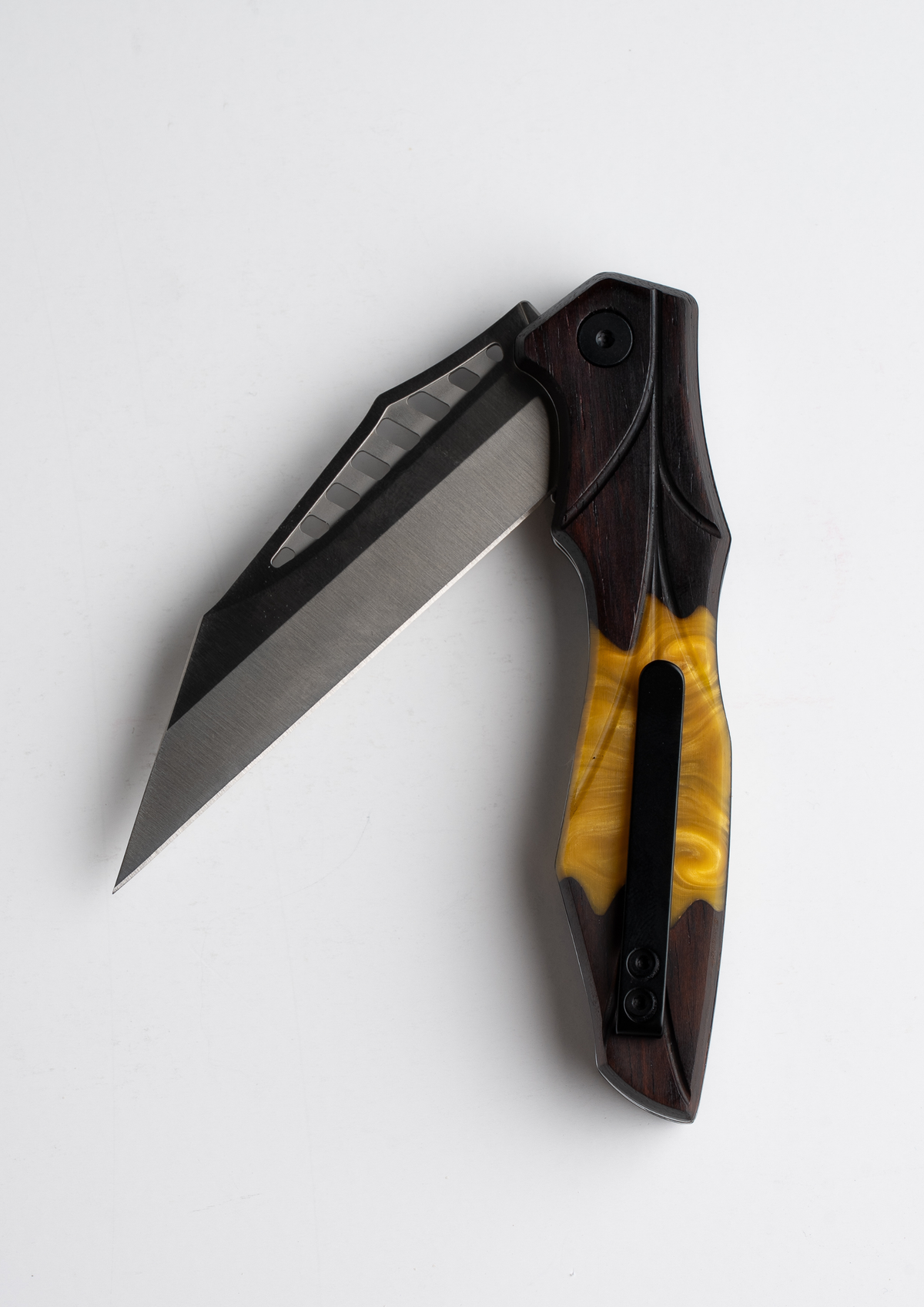
If you own a pocket knife in Australia, sooner or later you'll find yourself wondering the same thing: am I allowed to have this on me right now?
It's a fair question. Australian knife laws are often described as some of the strictest in the world, and they get reported on in ways that make it sound like carrying any blade in public is asking for trouble. The reality is more nuanced — and, once you understand the underlying principle, much easier to live with.
This is the plain-English guide we wish existed when we started the Koi Knives Aviary. No statute quoting. No scaremongering. Just what actually matters if you carry a folder in your pocket, clip, or tool roll.
One thing up front: we're a knife company, not lawyers. This article is general information only. Laws differ by state and change over time. If you need a definitive answer for a specific situation, check your state police or firearms branch website, or speak to a solicitor. For a state-by-state rundown of penalties and prohibited knife types, see our companion article: Pocket Knife Laws — State by State.
The one principle that runs through every state
Every Australian state and territory starts from the same place: you cannot carry a knife in a public place without a lawful (or reasonable) excuse.
That's it. That's the rule. The knife isn't the problem — carrying it with no reason is.
The legislation is different in each state. The penalties vary. The lists of outright-prohibited knives (flick knives, butterfly knives, ballistic knives, disguised blades) vary slightly too. But the core principle is uniform nationwide: no lawful excuse = no carry.
Importantly, self-defence is never a lawful excuse. Not in any state, not under any circumstance. If you tell a police officer you carry a knife "for protection," you've just admitted to an offence. Don't do it.
What actually counts as a lawful excuse?
Courts and police have been reasonably consistent about what qualifies. A lawful excuse is generally accepted if the knife is genuinely needed for:
- Work or trade — tradies, chefs, fishers, butchers, farmers, horticulturalists, paramedics, shearers, rangers, fencers. If cutting is part of the job, carrying a suitable knife to and from that job is accepted.
- Lawful recreation — camping, hunting (where licensed), fishing, hiking, bushwalking, scouting, sailing, rock climbing.
- Food preparation — picnicking, a chef transporting their knives to the restaurant, cutting fruit at a park.
- Trade or exhibition — collectors attending a knife show, retailers moving stock, people demonstrating at a fete.
- Religious or cultural purpose — the kirpan worn by practising Sikhs is a well-established example.
- Uniform or organised activity — scout leaders in uniform, pipe band members carrying a dirk as an accessory.
The crucial word in all of this is genuine. Claiming "I might go fishing later" while walking through a shopping centre at 2am won't fly. The lawful excuse has to match the knife, the time, the place, and what you're actually doing.
Real-world scenarios: does this pass the pub test?
Here's where most people get confused. Let's run through common situations and what makes them legally clean — or not.
The tradie on the way to site
You're a carpenter driving from home to a job site with your Aviary folder clipped in your pocket. You use it daily to strip cable, trim lanyards, open boxes of fittings.
Verdict: Clean. Work is the clearest lawful excuse there is. You don't even need to be at the site yet — travelling to and from work counts, provided the knife suits the work and you're not detouring through a pub crawl.
The fisherman at the boat ramp
You've got a fillet-suitable folder in your tackle box, heading to the boat ramp with rods loaded.
Verdict: Clean. Fishing is specifically listed as a lawful excuse across every state. A knife in your tackle bag makes obvious sense.
The hiker on a weekend walk
Daypack, boots, water, a folder for cutting rope, preparing lunch at the summit, or handling first-aid situations.
Verdict: Clean. Lawful recreation. Keep the knife in your pack rather than visibly on your belt while you're in the carpark, and you're on solid ground.
The weekend shopper "just keeping it on me"
You're walking through Rundle Mall on a Saturday afternoon with your folder clipped inside your pocket, no plan to cut anything, no job, no fishing trip. You just like having it.
Verdict: This is where most people come unstuck. "I always carry it" and "it's handy" are not lawful excuses. If a police officer stops and searches you, you've got a problem — even if you never touched the knife and never intended to.
This is the single biggest misunderstanding about Australian knife laws. A pocket knife isn't illegal. Pointless carry is.
The gift recipient carrying it home
You've just bought a Koi Knives Aviary folder as a birthday gift and you're walking it back to your car in the box.
Verdict: Generally fine — transporting a newly purchased or wrapped knife directly home or to the giftee is accepted as a reasonable excuse. Keep it boxed, keep the receipt, don't detour.
The collector moving pieces
You're taking a knife to a mate's place to show him, or to a trade night at a knife club.
Verdict: Accepted, but keep it sheathed, packaged, in a bag or case — not clipped to your hip. Exhibition and trade between collectors is explicitly listed as a lawful excuse in most states.
Blade length: does it matter?
Short answer: less than people think.
Unlike the UK (where 3 inches is a famous cut-off), most Australian states don't set a rigid blade-length rule for general pocket knives. Victoria is the notable exception — it specifies utility knives with blades no longer than 10 cm as the type that can be carried for normal utility purposes.
Elsewhere, blade length becomes relevant mainly in two situations: when it pushes the knife into a prohibited-weapon category (daggers, bowie knives, double-edged blades) or when it affects the plausibility of your lawful excuse. A 3-inch folder in your tool roll reads as a utility tool. A 12-inch fixed blade on your belt at the pub reads as something else entirely.
The Aviary range sits comfortably in the practical EDC zone — folders with blades in the 7–9 cm range, single-edged, clearly designed as utility tools.
What about locking blades, one-hand opening, and assisted openers?
This is where Australia differs from the US and parts of Europe. Pay attention, because the terminology matters:
- Locking folders (liner lock, frame lock, axis lock, back lock) — legal in every state, with lawful excuse. This is what most of the Aviary range uses. A lock is a safety feature, not a legal trigger.
- Thumb stud or flipper (manual one-hand opening) — legal. You're still the one opening the blade. This is the standard on most modern EDC folders.
- Assisted openers (finish the opening once you start it) — grey area, state dependent. Some jurisdictions treat these as automatic knives; others don't. Worth checking if you're buying one.
- Automatic / switchblade / OTF (full spring-deployment at the press of a button) — prohibited import and generally prohibited to possess. Don't. The customs penalties alone aren't worth it.
- Gravity knives, butterfly knives, ballistic knives — prohibited weapons in essentially every state. Possession alone can be an offence, lawful excuse or not.
If you're stopped by police: what actually to do
If a police officer asks whether you're carrying a knife, the honest, calm, concise answer is always best.
- Be straightforward. Tell them what you have and where it is. Don't reach for it — tell them it's clipped in your right pocket or in your pack, and let them retrieve it.
- State your lawful excuse clearly and specifically. "I'm a sparky, I just finished a job at [address], I use it daily for stripping cable and opening fittings." Specific beats vague every time.
- Don't volunteer irrelevant information and don't claim things that aren't true. "For protection" is never the right answer.
- Keep proof where possible. A work ID, a fishing licence in your wallet, a gym-bag full of camping gear — anything that corroborates your story helps.
- Stay respectful. Whether or not you agree with the laws, the officer in front of you applies them. Courtesy goes a long way.
Travelling interstate with a pocket knife
The biggest thing to remember: the laws of the state you're in apply, not the laws of the state where you bought the knife.
A folder that's perfectly legal to own and carry (with lawful excuse) in South Australia is treated under Victorian law the moment you cross the border. States vary in their prohibited-weapon lists and their specific statutory language. Before a road trip:
- Keep the knife stored, sheathed or boxed in your luggage, not clipped to you.
- Check the destination state's prohibited-weapons list — particularly if you own anything that could be borderline (double-edged, longer fixed blades, disguised knives).
- If you're flying, a pocket knife goes in checked baggage only. Never in carry-on, no matter the blade length. Security will take it and you won't get it back.
Knives you cannot carry anywhere in Australia, full stop
Regardless of lawful excuse, these are prohibited weapons across most or all of the country and can carry serious penalties just for possession:
- Flick knives and automatic / OTF knives
- Butterfly / balisong knives
- Ballistic knives (blade fired by spring or mechanism)
- Disguised knives — belt-buckle knives, pen knives that look like pens, lipstick knives, comb knives
- Knuckle knives / trench knives
- Throwing stars / shuriken
- Push daggers
- Knives that can't be detected by a metal detector or x-ray
None of these are products Koi Knives sells. Every knife in the Aviary and the broader Koi Knives range is designed and built as a legal utility tool — a working folder for people with work to do.
The practical takeaway
Owning a pocket knife in Australia is straightforward. Carrying one is also straightforward, provided you're carrying it for a reason that passes the common-sense test.
Think of it this way: if you can comfortably explain to a stranger why you have this knife on you right now — and the explanation matches what you're actually doing — you're almost certainly in the clear. If the only honest answer is "I just carry it," you're not.
That's the whole law in one sentence.
Looking for a legal, purpose-built Aussie EDC?
The Koi Knives Pocket Knife Aviary is built on exactly this principle: folders designed as proper utility tools, in steels chosen for the work (CPM MagnaCut and Sandvik 14C28N — both chosen for chip resistance and edge retention), with native Australian hardwood handles that pair to what the knife is for.
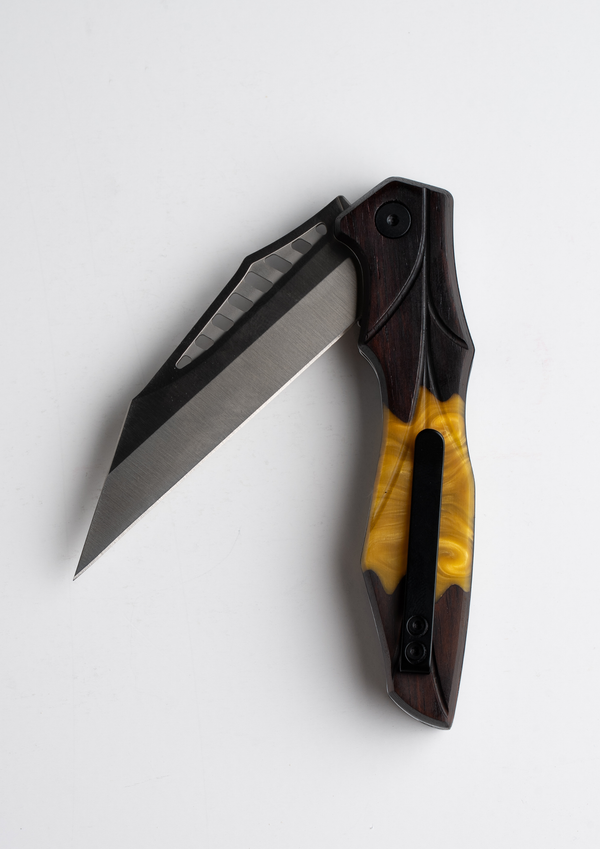
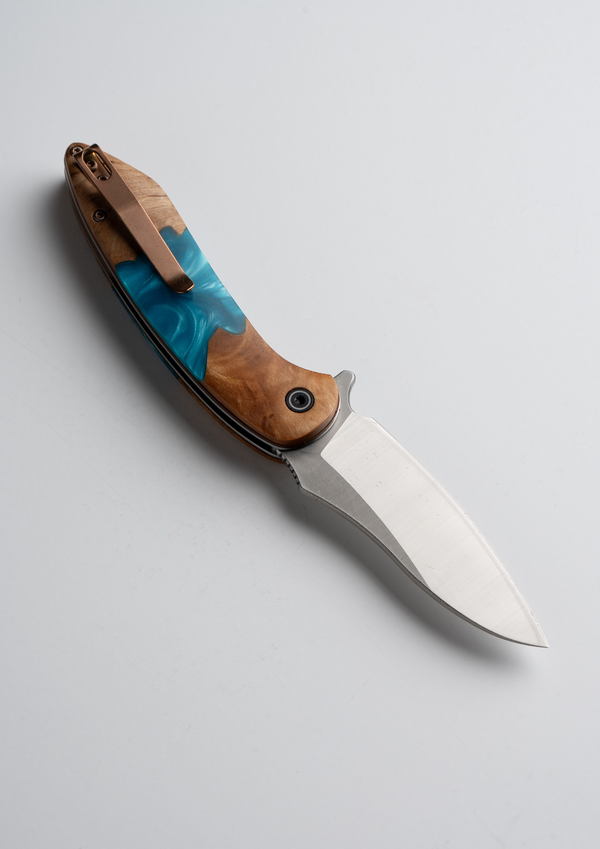
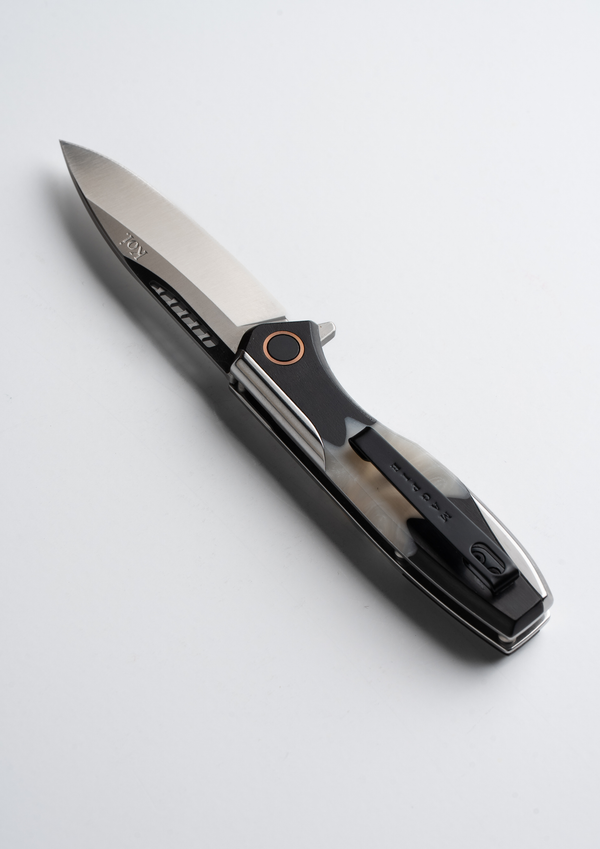
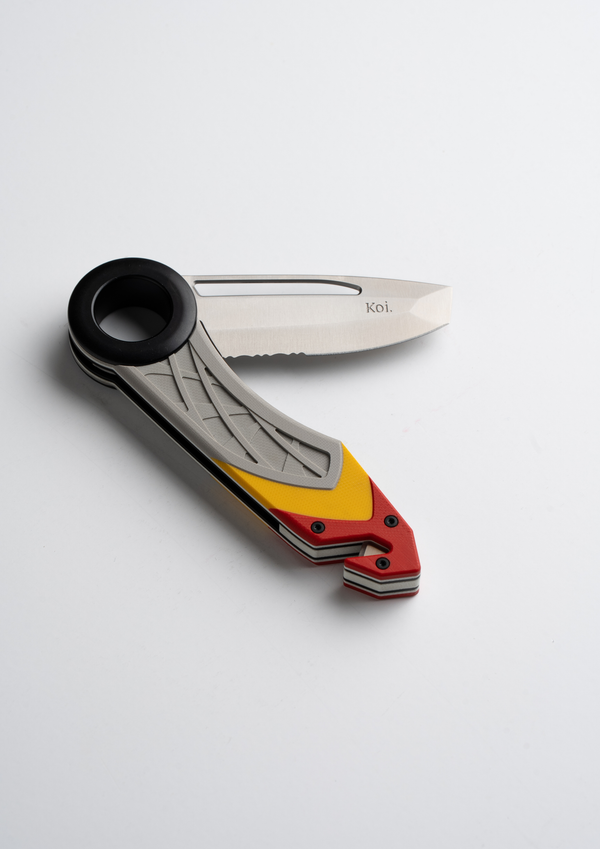
- Evan the Wedge-Tailed Eagle — the workhorse of the Aviary, built for tradies and serious outdoor use.
- Kyle the Kookaburra — the most iconic Aussie EDC we make.
- Max the Magpie — a classic MagnaCut EDC with real presence.
- Pat the Pacific Gull — a dedicated folder for fishing, where lawful excuse is cleanest.
Browse the full Aviary collection →
Still unsure about the laws where you live? State-specific rules, penalties, and prohibited knife lists are in our companion article: Pocket Knife Laws — State by State.