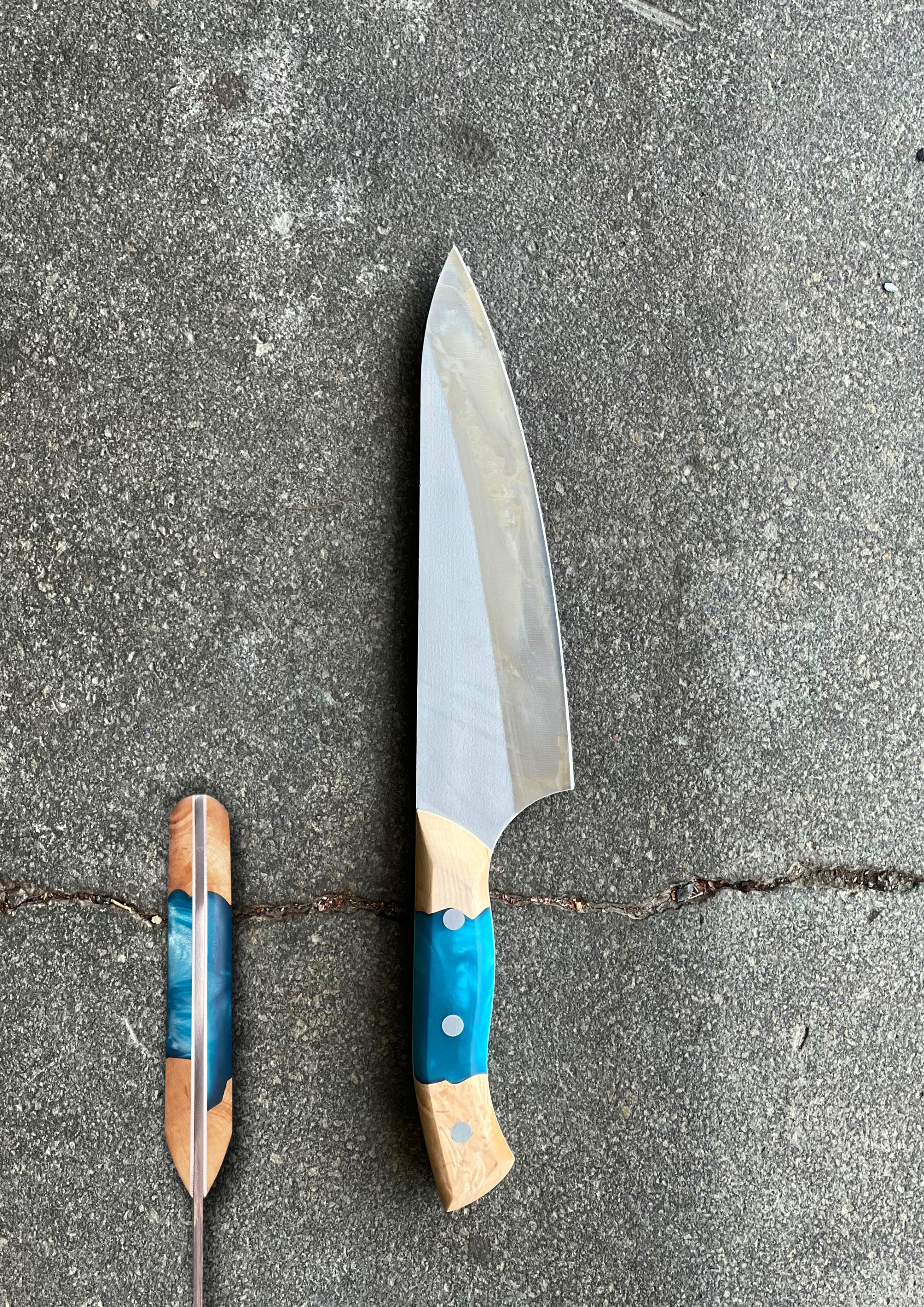
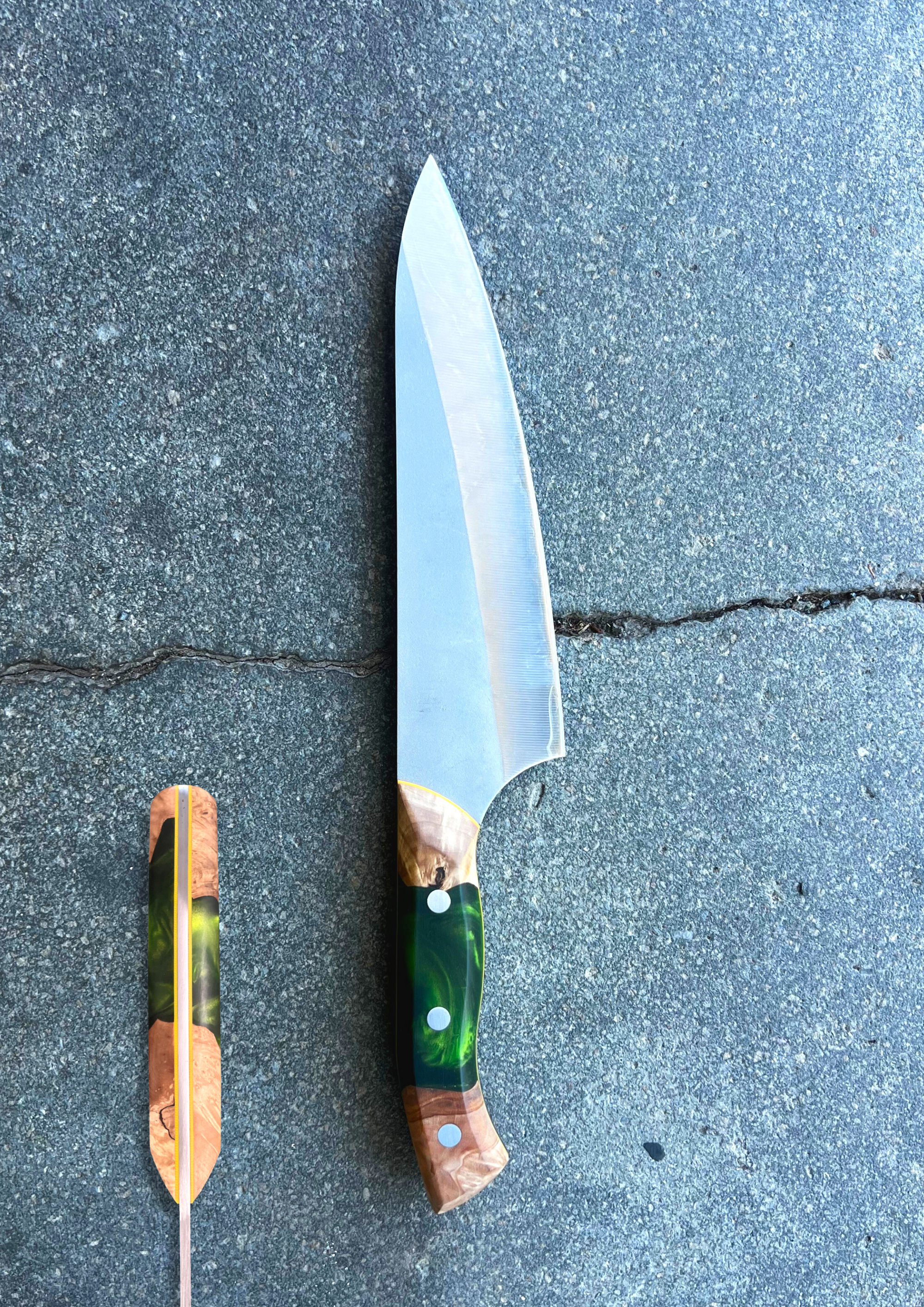
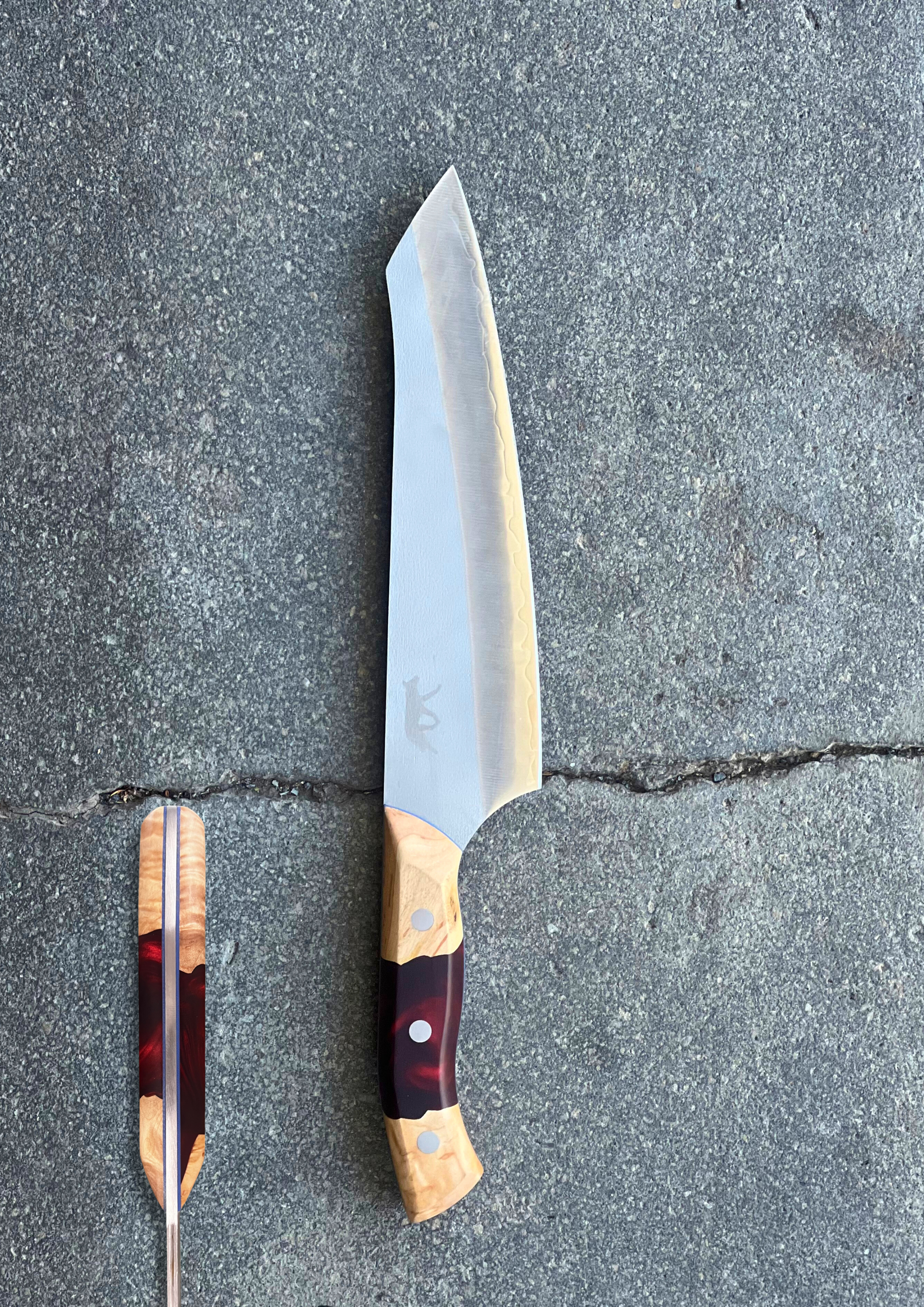
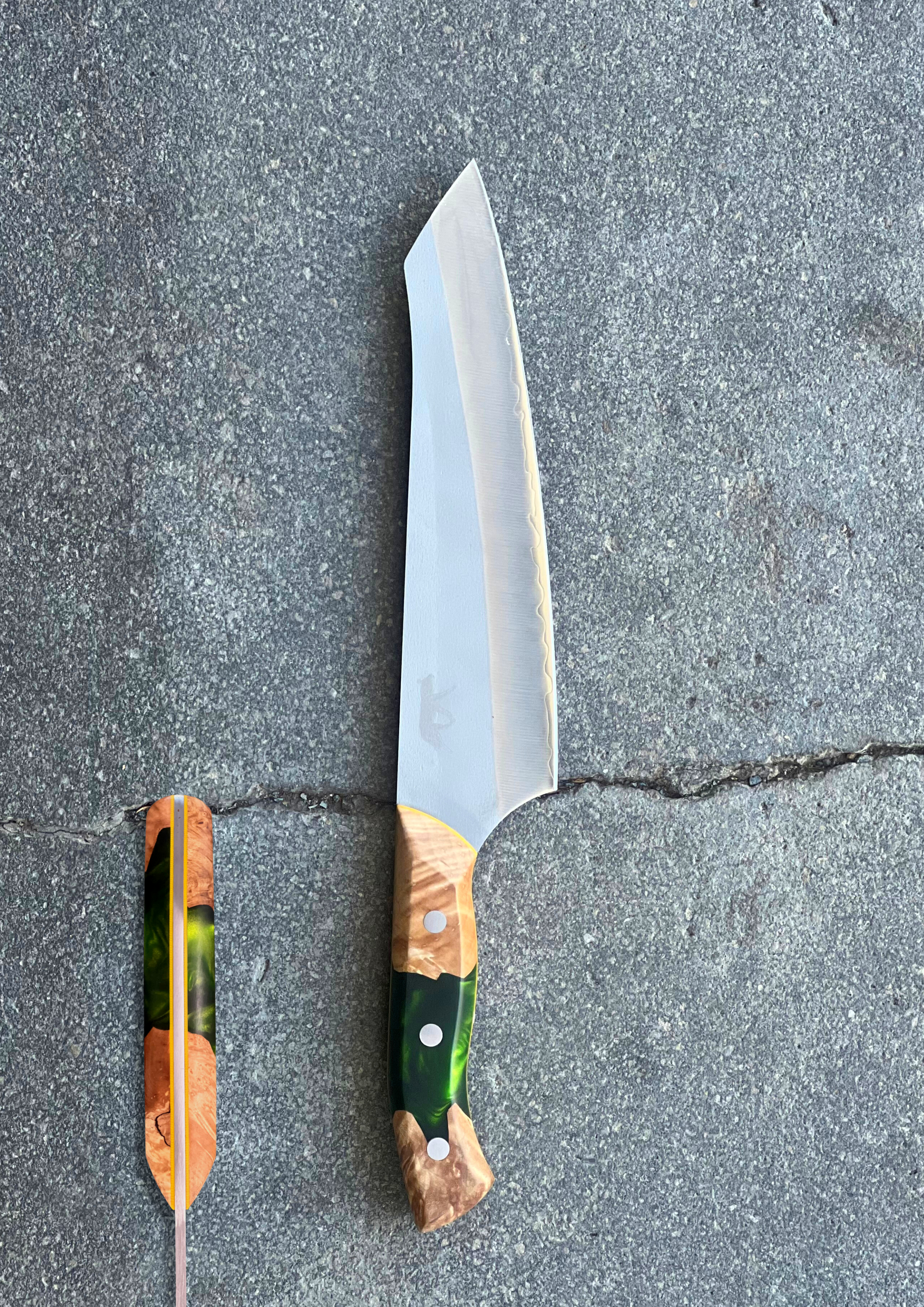
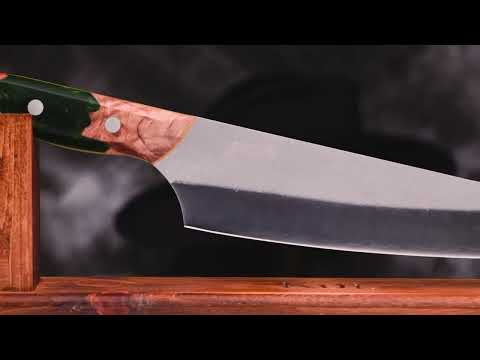
Chef Knives
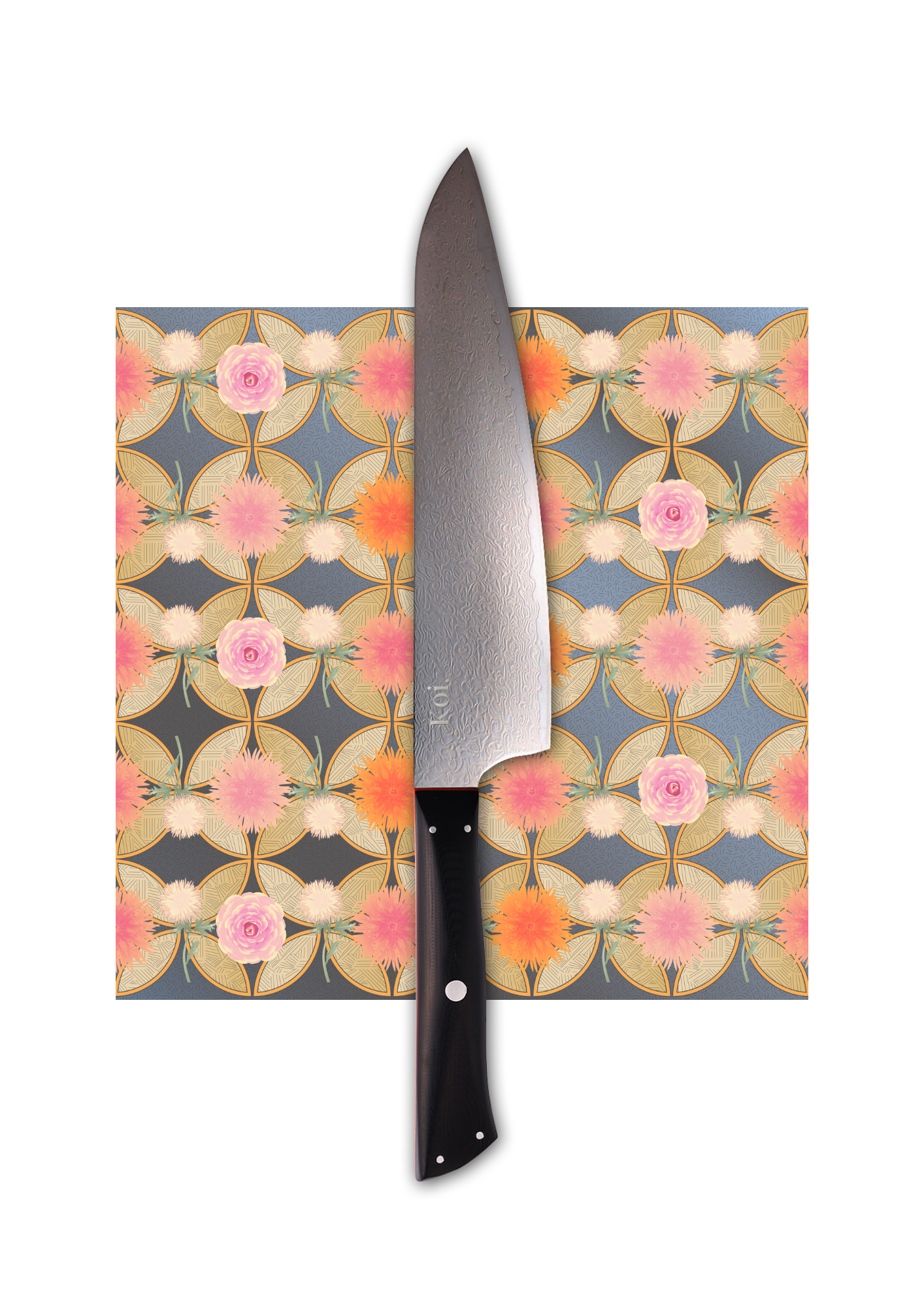
If you only ever own one good knife, make it this one. The chef's knife is the workhorse of any kitchen — the blade that handles the overwhelming majority of what you do on the board, from breaking down a chicken to fine-slicing a shallot.
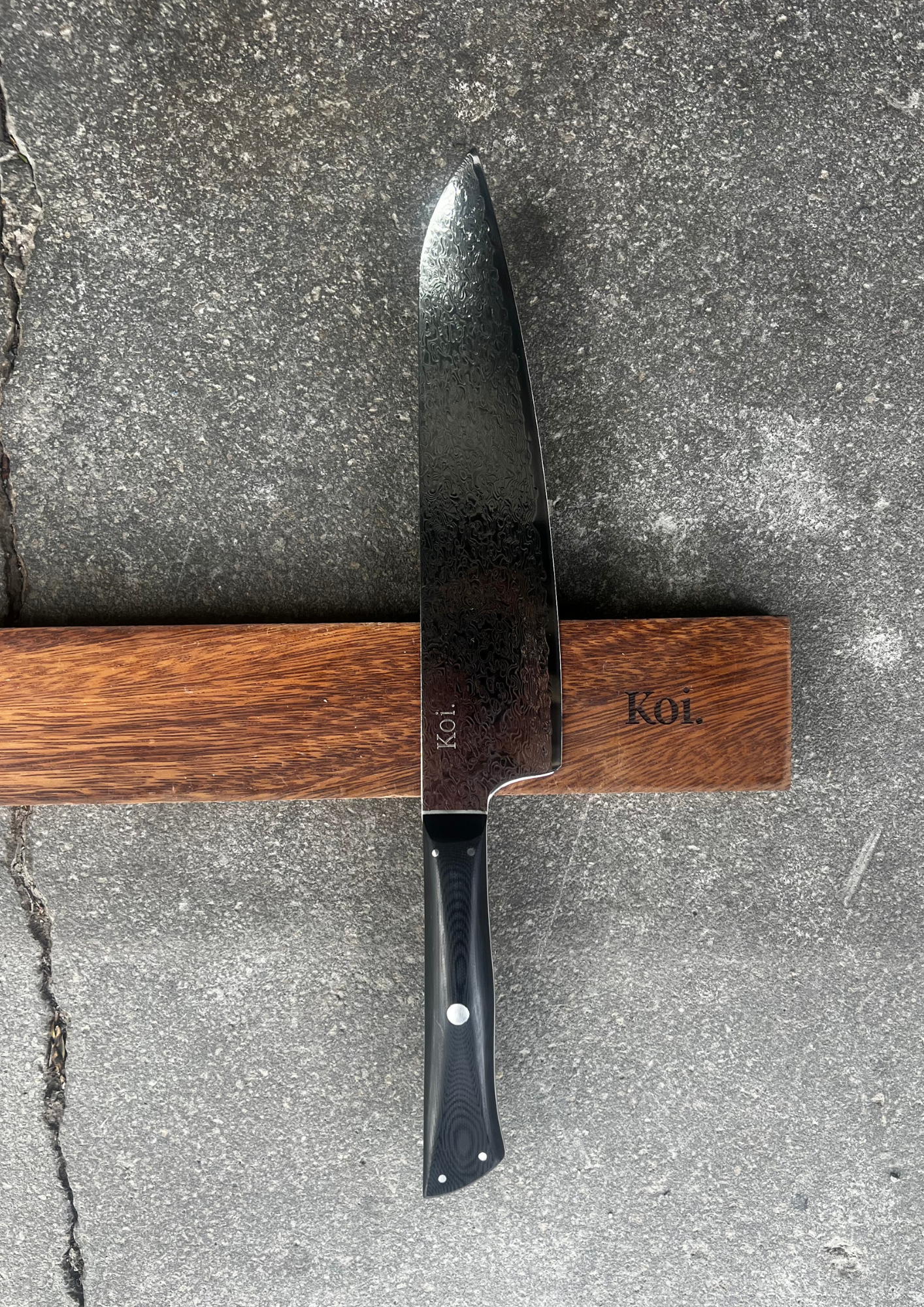
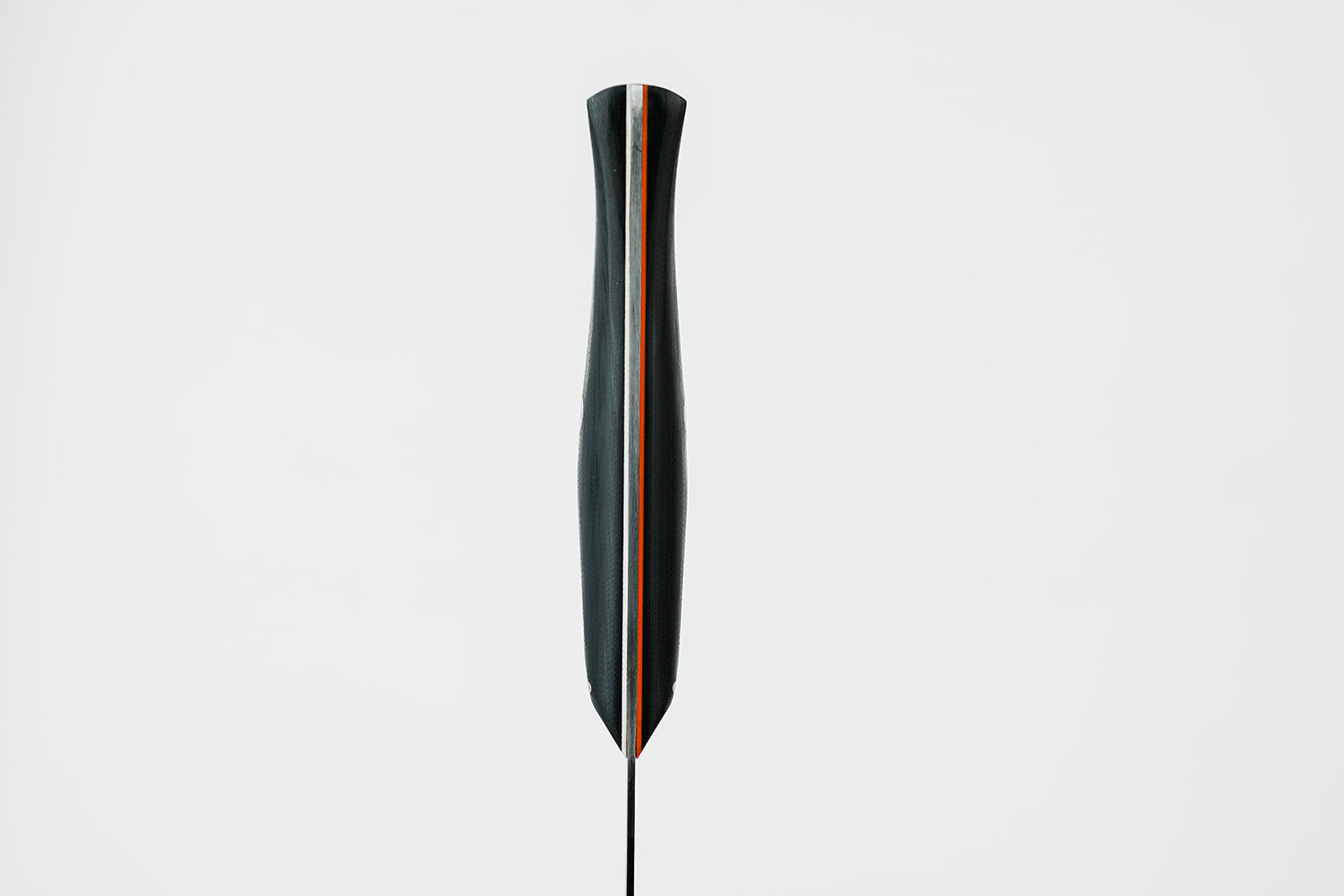
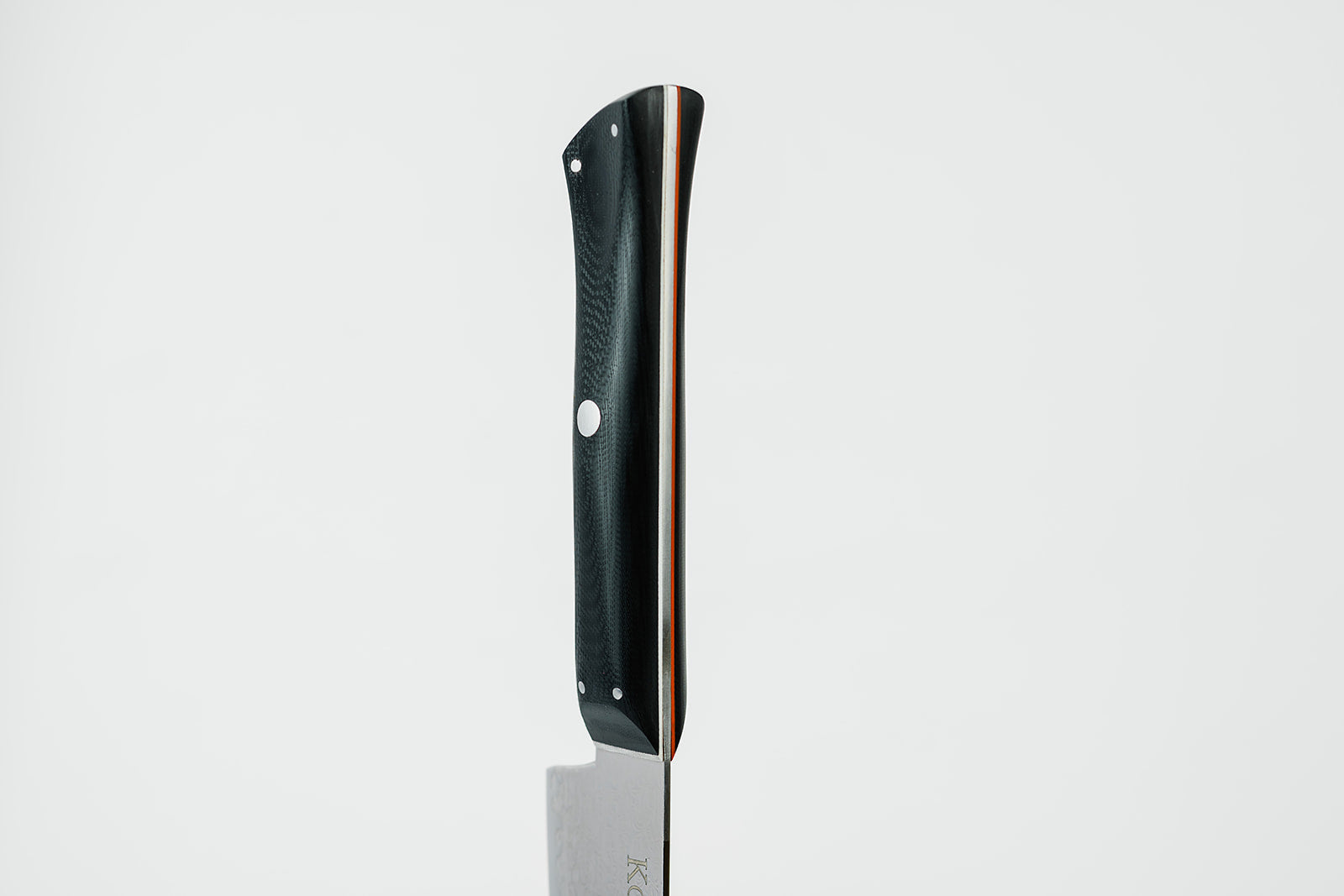
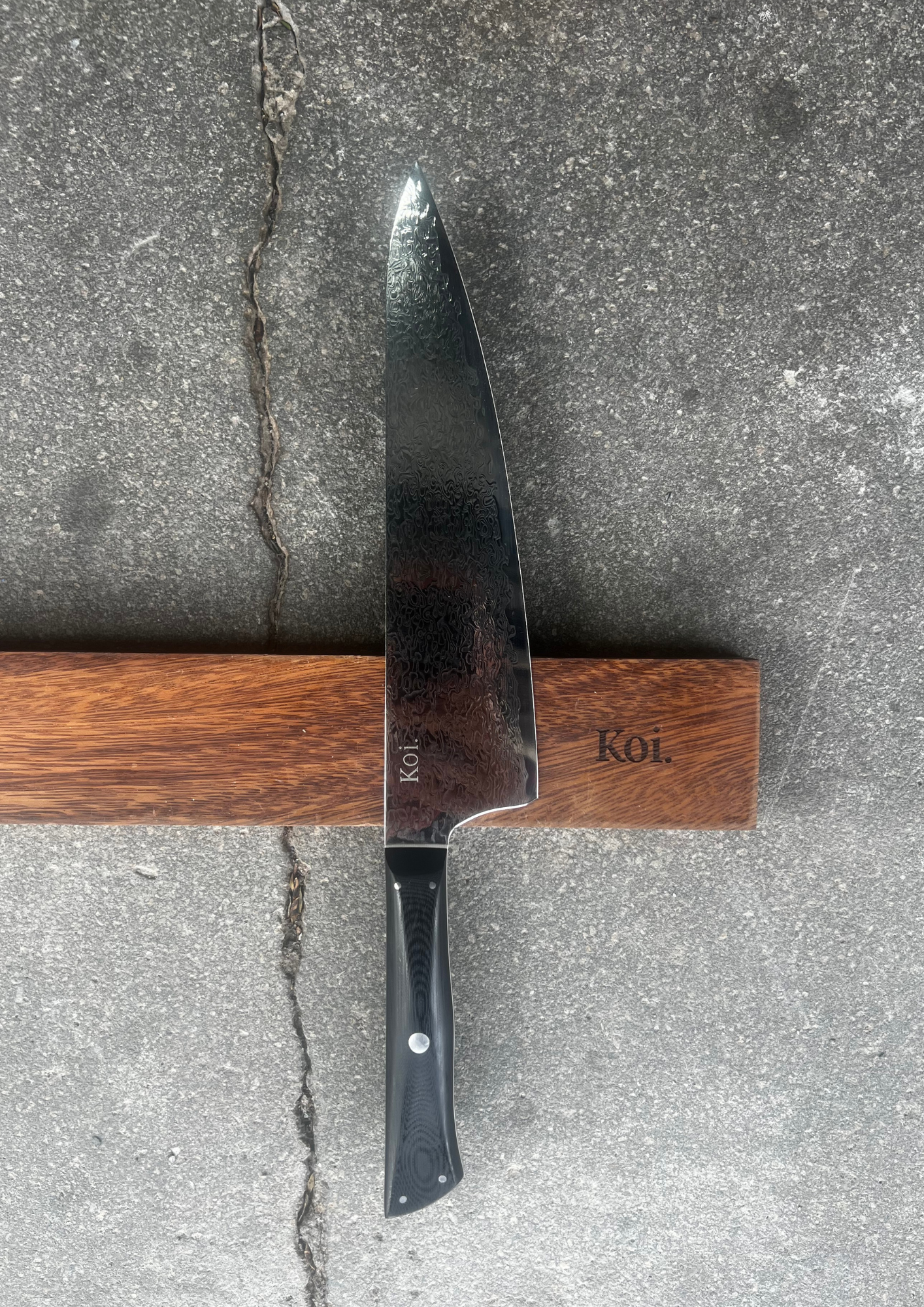
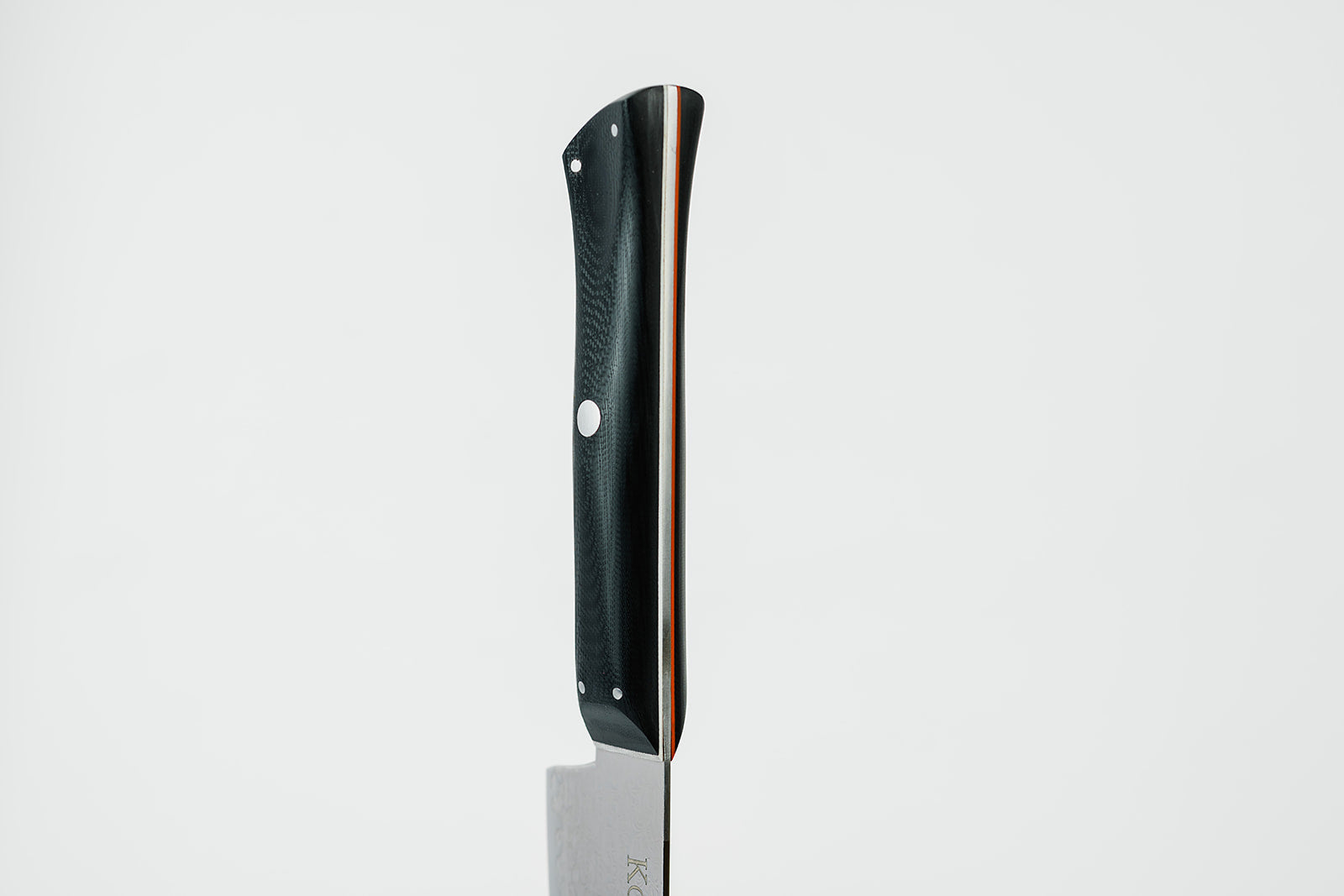
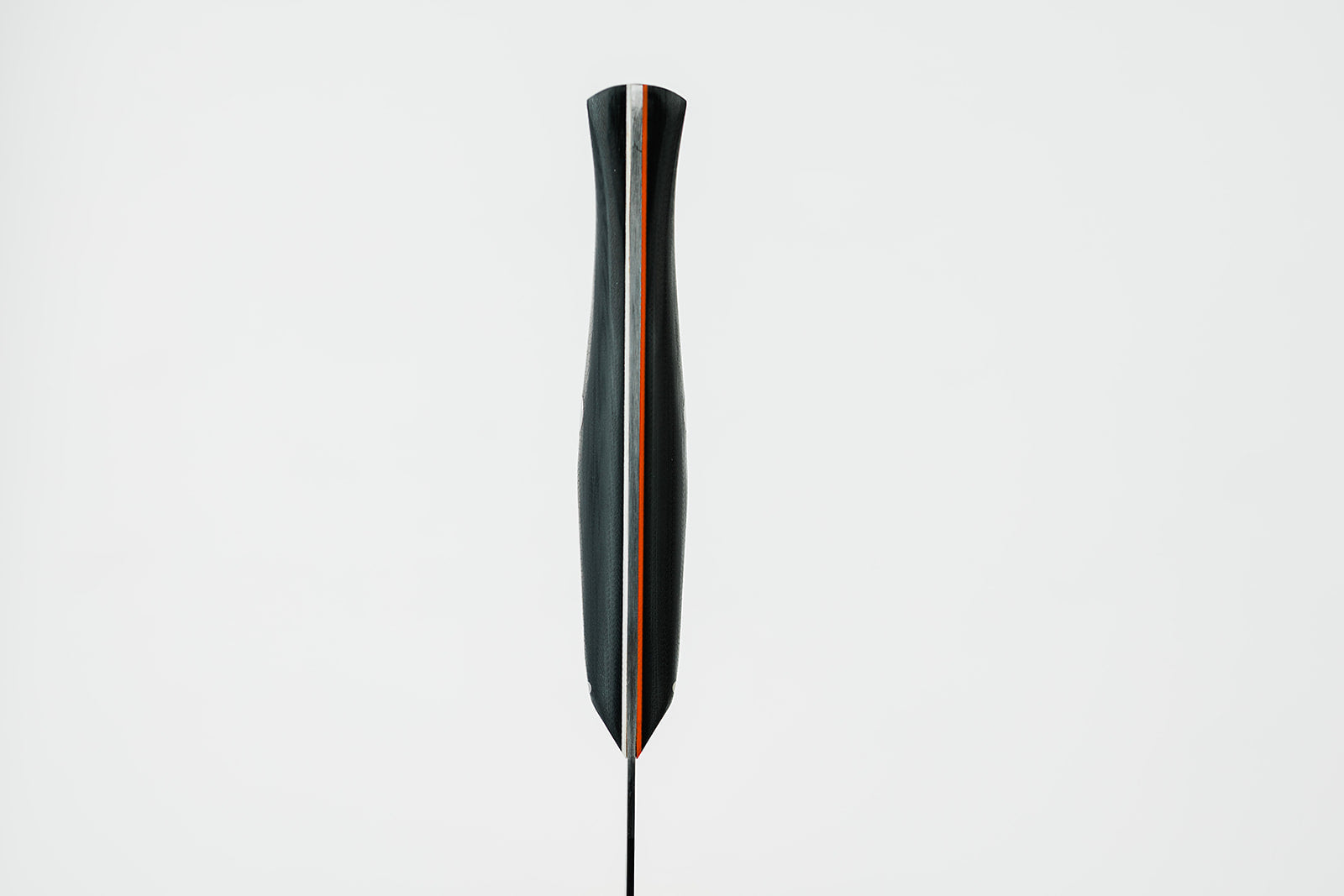
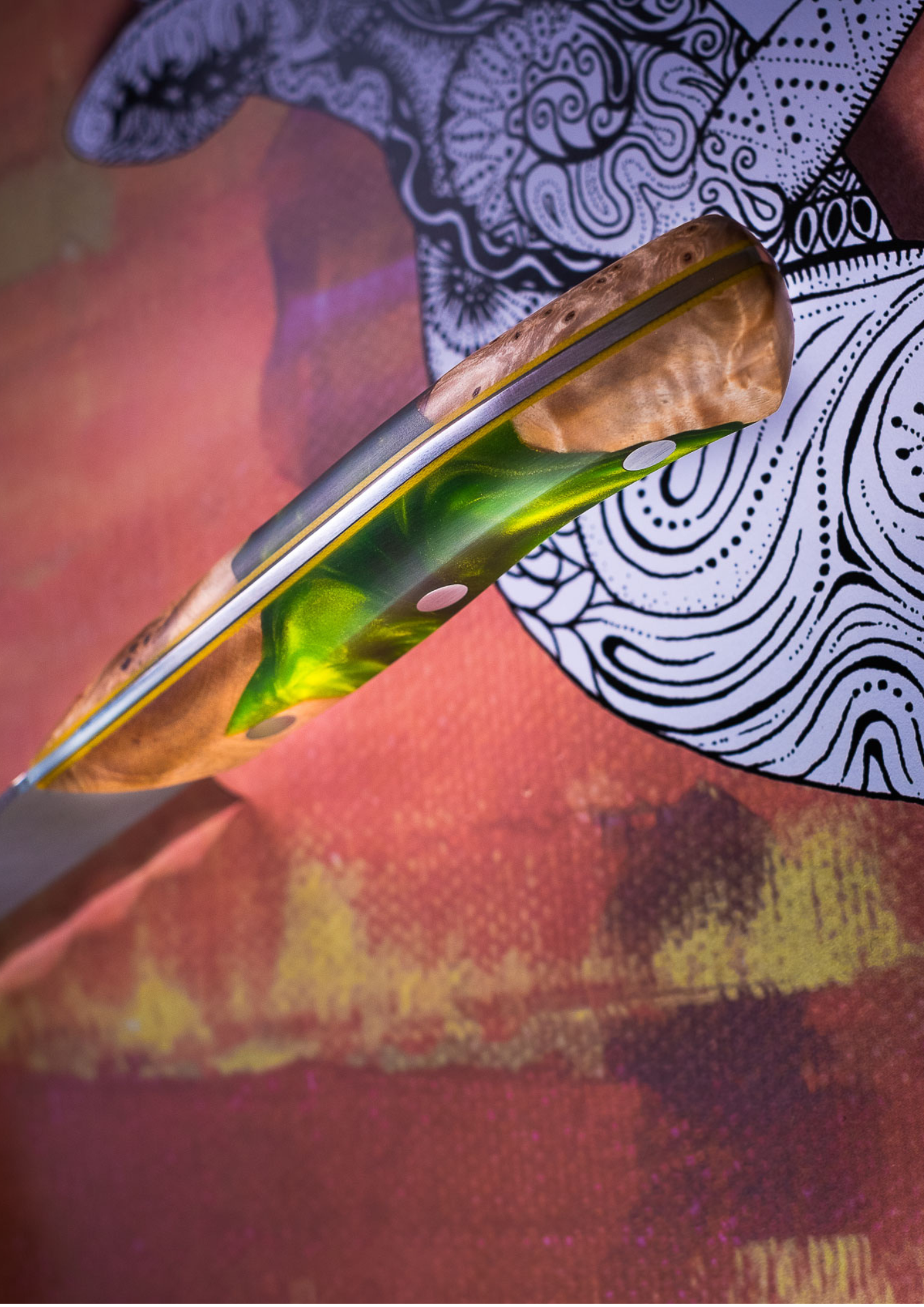
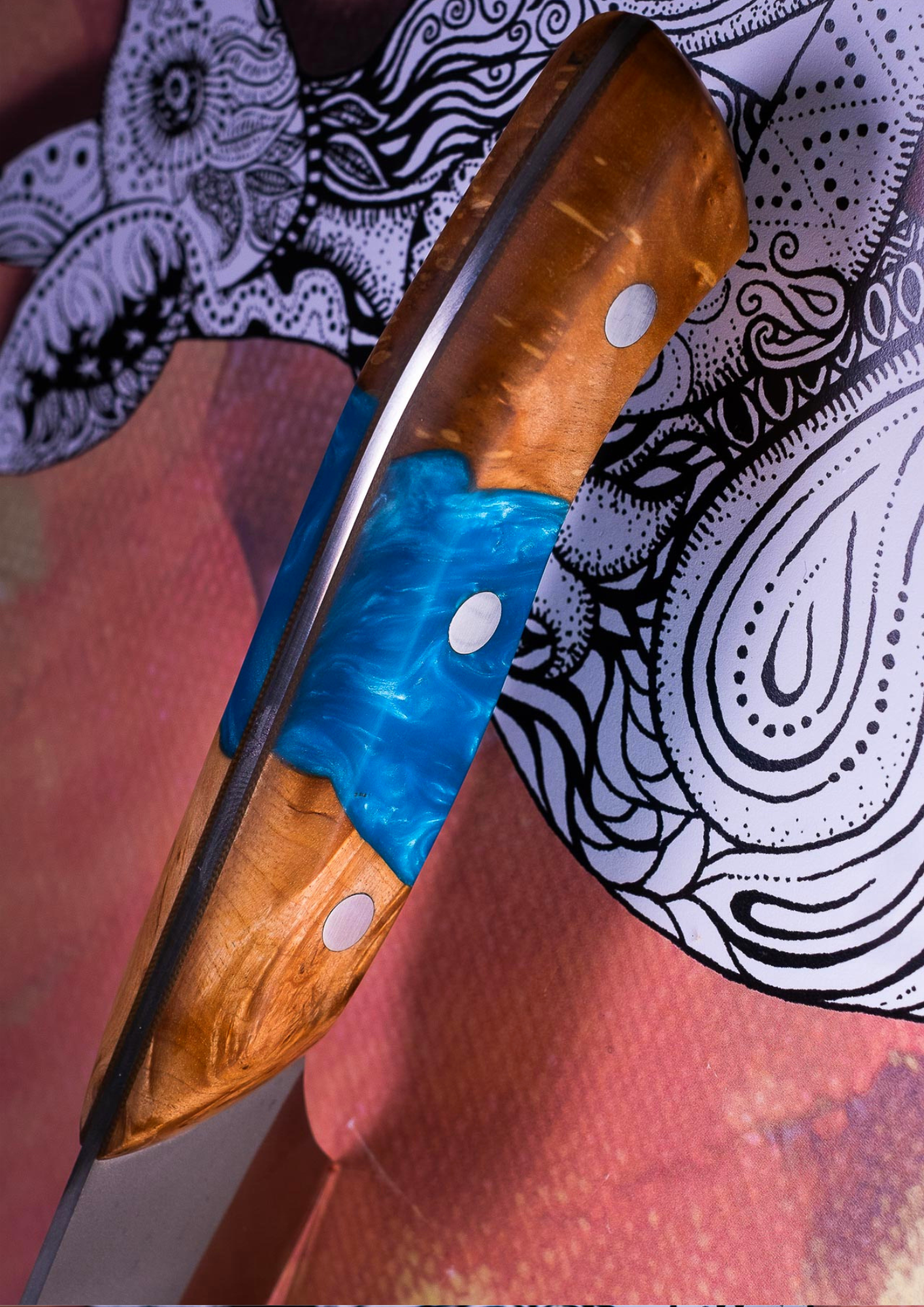
Every chef's knife we make is built around a Damascus VG10 core — a hard, fine-grained steel that takes a keen edge and holds it — finished with handles shaped for real, daily work. Below the range you'll find a short guide to choosing the right profile and length for the way you cook.
Choosing your chef's knife
A chef's knife is a personal tool — the right one depends on the size of your hands, the way you cut, and what you cook most. Here's how to narrow it down.
Gyuto, Santoku, or Western chef's — what's the difference?
All three are "chef's knives" in the sense that they're the do-everything blade. The difference is in the profile, and it changes how the knife feels in the hand.
- Gyuto — the Japanese chef's knife. Longer (usually 210–240mm), with a gently curved edge and a fine, precise tip. It's lighter and thinner than a Western chef's, which suits clean push-cuts and detailed work. The choice for cooks who want precision and speed.
- Santoku — shorter (around 165–180mm) with a flatter edge and a rounded tip. The flat profile favours a straight up-and-down cutting motion rather than rocking, which many home cooks find more natural. A great first "serious" knife, and easy to handle in a smaller kitchen.
- Western-style chef's — a more curved belly built for rock-chopping, where you keep the tip on the board and rock through herbs and vegetables. Heavier in the hand, with the heft some cooks prefer for confidence and control.
What size should I buy?
Bigger isn't better — the right length is the one you can control comfortably.
- 165–180mm — nimble, easy to control, ideal for smaller hands, smaller kitchens, or as a confident everyday knife. The Santoku lives here.
- 200–210mm — the sweet spot for most home cooks. Enough length to slice and portion efficiently, still easy to manage.
- 240mm — for those with the bench space and the confidence to use it; covers large prep and bigger cuts with fewer strokes.
If you're unsure, a 200–210mm blade is the safe, versatile choice that very few cooks ever outgrow.
The steel
Our chef's knives are built on a Damascus VG10 core. VG10 is a high-performance stainless steel chosen for the kitchen because it balances three things cooks actually care about: it takes a very sharp edge, it holds that edge through real use, and it resists the staining and corrosion that come with a busy kitchen. The Damascus layering wrapped around the core is what gives each blade its flowing, individual pattern — no two are identical.
It's stain-resistant, not indestructible. A good knife rewards a little care: wash and dry it by hand, never the dishwasher, and oil the wooden handle when it looks thirsty. The full routine is in our Knife Care Guide.
One knife or a set?
Start with one excellent chef's knife rather than a block of mediocre ones. A single blade you genuinely like will do almost everything, and you'll learn what — if anything — you actually want to add next. Most cooks find a paring knife and a bread knife are the only real companions a great chef's knife needs.
Want the wider picture? Our guides walk through the whole kitchen — knife types, steel, and how to build a collection that lasts.
Knife Care Guide · The Iconic River Collection · All Kitchen Knives